

 日本語
日本語 Tiếng Việt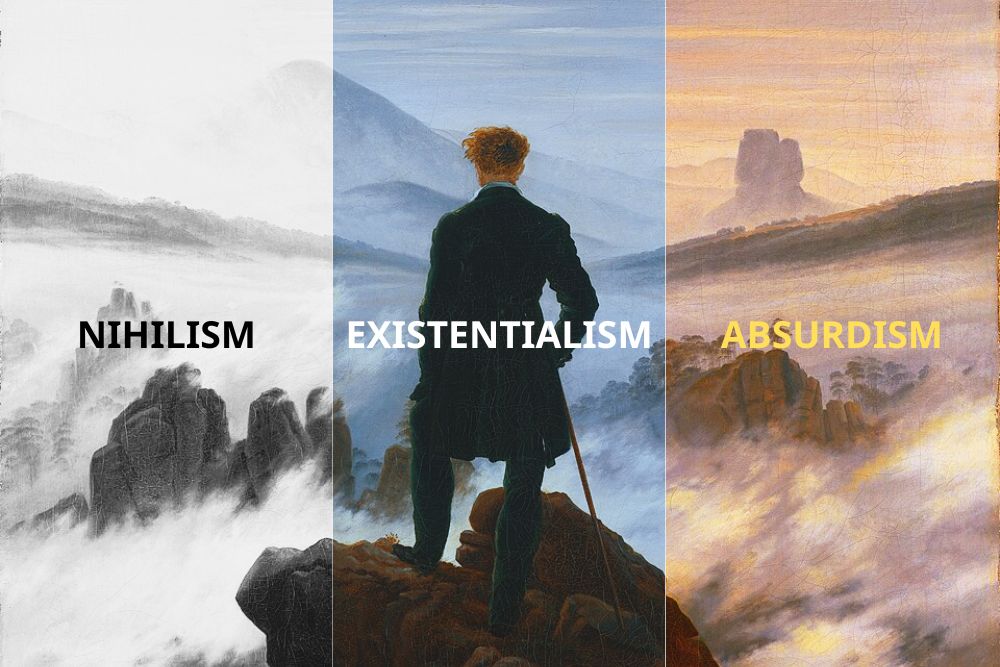
We have all been there, right?
It’s Monday morning. The alarm goes off at 6:30 AM. You stare at the ceiling, the grey light of dawn filtering through the curtains, and for a split second, you forget who you are.
Then, the reality rushes back in. You are “You.” You have to get up. You have to brush your teeth. You have to endure the commute, sitting in traffic or squeezed into a subway car with hundreds of other tired souls. You have to go to that job—the one that started with excitement but has slowly dissolved into a series of repetitive tasks, endless spreadsheets, and “urgent” meetings that could have been emails.
You look in the mirror, and a terrifying question bubbles up from your chest: Why?
Why am I doing this? Why do I have to endure the toxicity of office politics? Why do I have to smile at people I don’t respect? Why am I “me” and not someone else?
We live in a world that demands living on autopilot. We are told to chase the promotion, buy the house, post the happy photos on Instagram, and ignore the gnawing feeling that something is missing.
We see the news—wars waging, natural disasters striking, good people suffering while the corrupt seem to prosper—and the “script” society gave us starts to crumble.
This feeling isn’t a defect in your brain. It isn’t just “burnout.”
It is what philosophers call the Existential Vacuum. It is the moment the noise stops, and you are left with the silence of the universe.
How we respond to that silence defines our lives. And broadly speaking, humanity has come up with three major responses: to succumb to the silence (Nihilism), to shout our own meaning into it (Existentialism), or to accept the silence and choose to dance anyway (Absurdism).
To find the truth, we need to understand the diagnosis first. We have to look at the abyss.
Highlights
- The “abyss” is the honest philosophical realization that the universe possesses no inherent, objective meaning.
- When faced with it, we have three choices: surrender to it (Nihilism), create our own subjective meaning through radical freedom (Existentialism), or rebel against it with passion (Absurdism).
- The greatest danger isn’t the meaningless universe, but the “Sickness Unto Death”—losing our true selves by conforming to society’s expectations rather than living authentically.
- You don’t need to fit into a rigid box. Whether you are a Christian Existentialist, a Zen practitioner, or an Absurdist, the goal is the same: to kindle your own light and live a life that feels true to you.
The Diagnosis: Nihilism
What is Nihilism?
Meaningless! Meaningless! Utterly meaningless! Everything is meaningless.
Ecclesiastes 1:2
If you strip away every comforting lie we tell ourselves—that everything happens for a reason, that the good guys win, that there is a grand plan—you arrive at the doorstep of Nihilism.
Nihilism is often misunderstood as just being “edgy” or depressed. But philosophically, it is simply the rejection of intrinsic meaning. It is the realization that the universe is indifferent to your hopes and fears. That “the rain falls on the just and the unjust alike”.
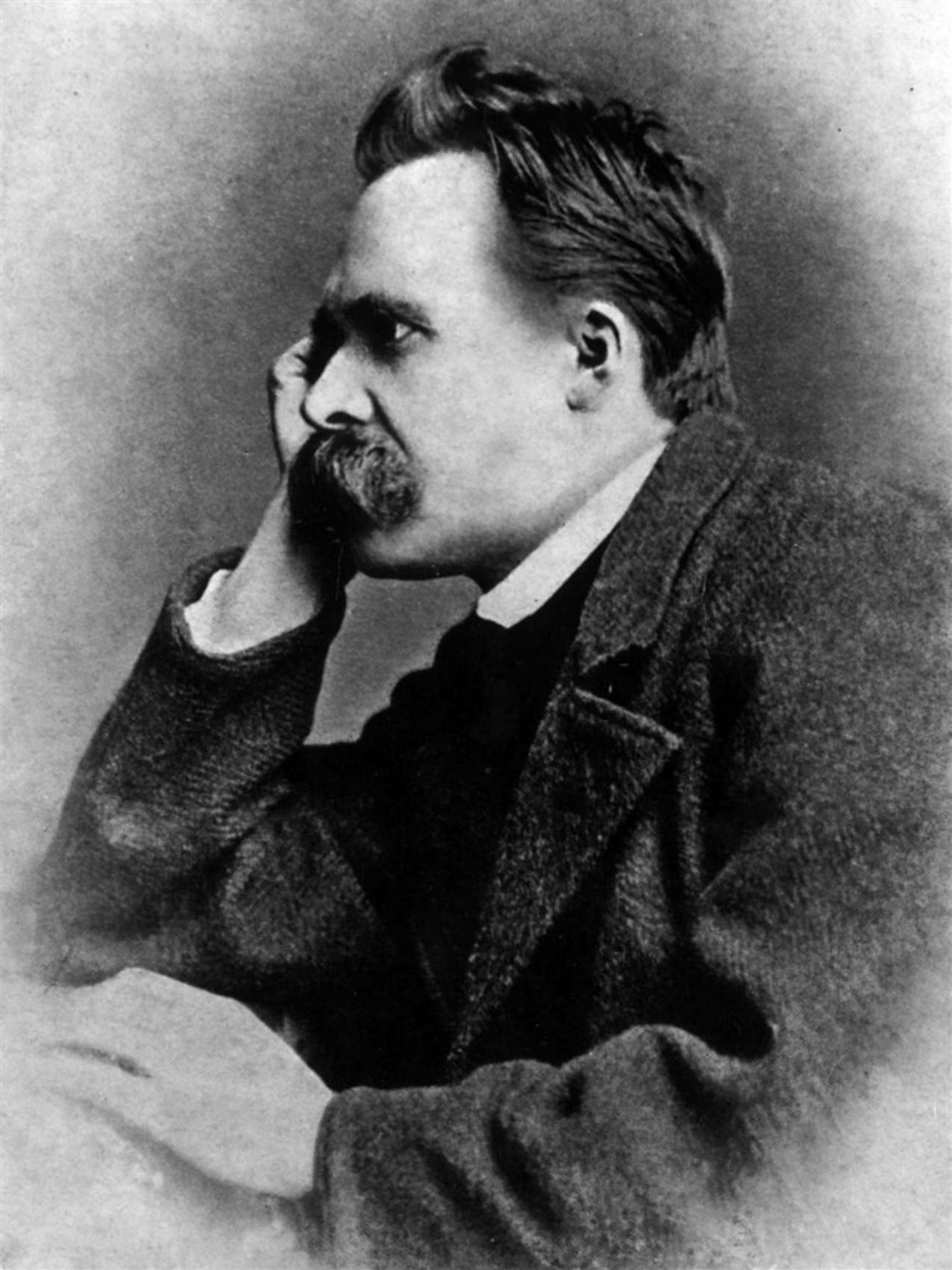
The most famous proclamation of this era came from Friedrich Nietzsche. You’ve likely heard it, but pause for a moment to really let it sink in:
God is dead. God remains dead. And we have killed him. How shall we, the murderers of all murderers, comfort ourselves?
When Nietzsche wrote this, he wasn’t merely celebrating atheism. He was issuing a warning.
He saw that the absolute structures that held human society together—religion, objective morality, the divine right of kings—were collapsing under the weight of modernity and science. And he was asking: Now that we have destroyed the ultimate authority, what will stop us from falling into total despair?
Nihilism vs Existentialism vs Absurdism
The danger of the abyss
If you gaze long into an abyss, the abyss will gaze back into you.
Friedrich Nietzsche
The danger of Nihilism is its tendency to stop at the diagnosis. It says, “Nothing matters,” and concludes, “So why bother?“
I myself have seen the tragic cost of this despair up close.
Years ago, my uncle took his own life. On the surface, it was sparked by a conflict with a neighbor—a seemingly trivial dispute.
But looking back, I believe that was just the final crack in the dam. He was a man crushed by the weight of existence, seemingly unable to find a reason to endure the suffering that life inevitably brings.
What haunted me most wasn’t just the tragedy of his death, but the reaction of the community. In my religious neighborhood, the immediate concern wasn’t compassion for his soul or his pain. The concern was bureaucratic and cold.
People attended my uncle’s funeral not because they felt sorry for him – but only to see whether he could be buried in “consecrated ground.” His family had to scramble to get a certificate from a priest proving he had confessed before the end.
I remember watching my mother, a devout (but somehow fanatic) woman, shirk away from my questions. “Don’t ask,” she would say, terrified that even discussing it was blasphemy. The priest told us to simply “let it go” – without any tangible attempt to address the underlying issue. (the conflict between my uncle’s family and the neighbor)
It felt absurd. It felt cruel.
This is where Nihilism gains its foothold. When the systems we trust—religion, society, “common sense”—fail to extend compassion or answers to real suffering, they reveal their emptiness.
When you see the “virtuous” act without virtue, and the “religious” prioritize rules over love, it is easy to conclude that the whole game is rigged. That it’s all a lie. That nothing matters.
Nihilism vs Existentialism vs Absurdism
The flip side of Nihilism
However, there is a strange sort of freedom here, if you are brave enough to take it.
If the universe is truly meaningless, then it means you have no “destiny” to fulfill. You cannot “fail” at life, because there is no standard to measure against.
All those embarrassing memories, the career mistakes, the awkward conversations? In the grand scheme of the cosmos, they don’t matter.
Nihilism strips the paint off the walls. It shows us the bare structure of reality. It is a terrifying place to visit, and a dangerous place to live.
But it is a necessary starting point. You have to realize the house is empty before you can decide how to furnish it.
The Response: Existentialism
If Nihilism diagnoses that the house of life is empty, Existentialism hands you the furniture and says, “Decorate it yourself.“
It is a philosophy of radical responsibility. It agrees with the Nihilist premise—that there is no pre-written script, no “destiny” carved in stone—but it vehemently rejects the conclusion that we should give up. Instead, it offers a powerful, albeit terrifying, alternative: We are free.
Jean-Paul Sartre, the chain-smoking face of French existentialism, declared that “Existence precedes Essence.“
In simpler terms: You exist first. You show up on the scene, you breathe, you encounter the world. Only after that do you define who and what you are through your choices.
You are not born a “hero” or a “coward,” a “waiter” or a “teacher.” You become those things by acting like them.
The weight of freedom
This freedom is not light; it is heavy. Sartre called it being “condemned to be free.”
Why condemned? Because if there is no pre-set meaning, there are no excuses.
We cannot blame “society,” “upbringing,” or “human nature” for who we become. We are entirely responsible for our own lives.
Nihilism vs Existentialism: The story of Grendel
In John Gardner’s novel Grendel, the famous monster from Beowulf is reimagined not as a mindless beast, but as a lonely observer desperately looking for meaning.
Grendel is an outcast. He watches the humans and sees them constructing “crackpot theories”—creating governments, singing songs of heroism, and building religions—just to cope with the terror of existence. He wants to believe in their songs, but he can’t.
Then, he meets the Dragon.
The Dragon is the ultimate Nihilist. He claims to see all of time and space, and because he sees the end—where everything turns to dust and ashes—he concludes that nothing matters now.
He mocks Grendel’s search for meaning. He tells the monster to stop worrying and just satisfy his greed.
“Meaningless… These jugs and pebbles, everything, these too will go. Poof!“

Nihilism vs Existentialism vs Absurdism
The Dragon represents that cold, rational voice in our heads that says: The universe will end anyway. Climate change will get us. The sun will explode. So why bother being ‘good’? Why not smash? Why not cheat? Why not sit on a pile of gold and let the world burn?
This is the Existentialist’s battlefield. The Dragon is technically right—objectively, the universe is indifferent. But the Existentialist looks at the Dragon and answers:
“Because I choose otherwise.“
In a universe that screams “Why not?”, the Existentialist whispers “Because I say so.”
We do not find light in the darkness; we supply it.
Is existentialism just for atheists?
At the point where the road swings off (and where that is cannot be stated objectively, since it is precisely subjectivity), objective knowledge is suspended. Objectively he then has only uncertainty, but this is precisely what intensifies the infinite passion of inwardness, and truth is precisely the daring venture of choosing the objective uncertainty with the passion of the infinite.
Søren Kierkegaard
There is a popular misconception that Existentialism is purely an atheistic, secular club. This couldn’t be further from the truth. In fact, the “father” of existentialism was Søren Kierkegaard, a deeply devout Christian philosopher.
Kierkegaard didn’t care about the “Sunday Christian” who goes to church just to be seen by the neighbors—the kind of systemic, hollow religion that worried about my uncle’s burial plot. He cared about the individual’s relationship with the Divine.
For the religious existentialists (and I count myself among them), the “death of God” isn’t the end of faith; it is the death of the idol of certainty. It is the realization that God cannot be captured in a rigid set of rules or a certificate of confession. As those like Paul Tillich suggested:
Faith consists in being vitally concerned with that Ultimate Reality to which I give the symbolical name of God. Whoever reflects earnestly on the meaning of life is on the verge of an act of faith.
Whether you are religious or secular, the core tenet remains the same: Authenticity. It means stripping away the “bad faith“—the masks we wear for our bosses, the fake smiles, the roles we play to please others—and finding, as Kierkegaard put it:
The crucial thing is to find a truth which is truth for me, for which I am willing to live and die.

Nihilism vs Existentialism vs Absurdism
Fun fact: Did you know that the term “existentialism” (French: existentialisme) was originally coined NOT by the atheist Sartre, but by the Catholic philosopher Gabriel Marcel? It is so ironic considering that Marcel invented the word largely to distinguish his own thinking from Sartre’s, only to have Sartre embrace the label and effectively “steal” the brand later!
What started as a philosophy of “the mystery of being” has now been associated, by default, with atheism. I cannot help but feel that it’s quite unfortunate for things to have ended up that way.
The Rebellion: Absurdism
But what if you can’t create your own meaning? What if the attempt to “build your own truth” feels like just another “crackpot theory” the humans in Grendel invented to make themselves feel better?
That is where Absurdism enters the room.
Albert Camus, the French-Algerian philosopher, had a slightly different take. He looked at the human condition and saw a fundamental divorce between two things:
- The human heart’s desperate, crying need for meaning and clarity.
- The universe’s cold, absolute silence.
He called this tension The Absurd.
Camus argued that Existentialists (like Sartre and Kierkegaard) were cheating. He claimed that by taking a “leap of faith” (either toward God or toward self-created meaning), they were committing “philosophical suicide.” They were trying to resolve a tension that cannot be resolved.
The Myth of Sisyphus
To explain his solution, Camus used the Greek myth of Sisyphus.
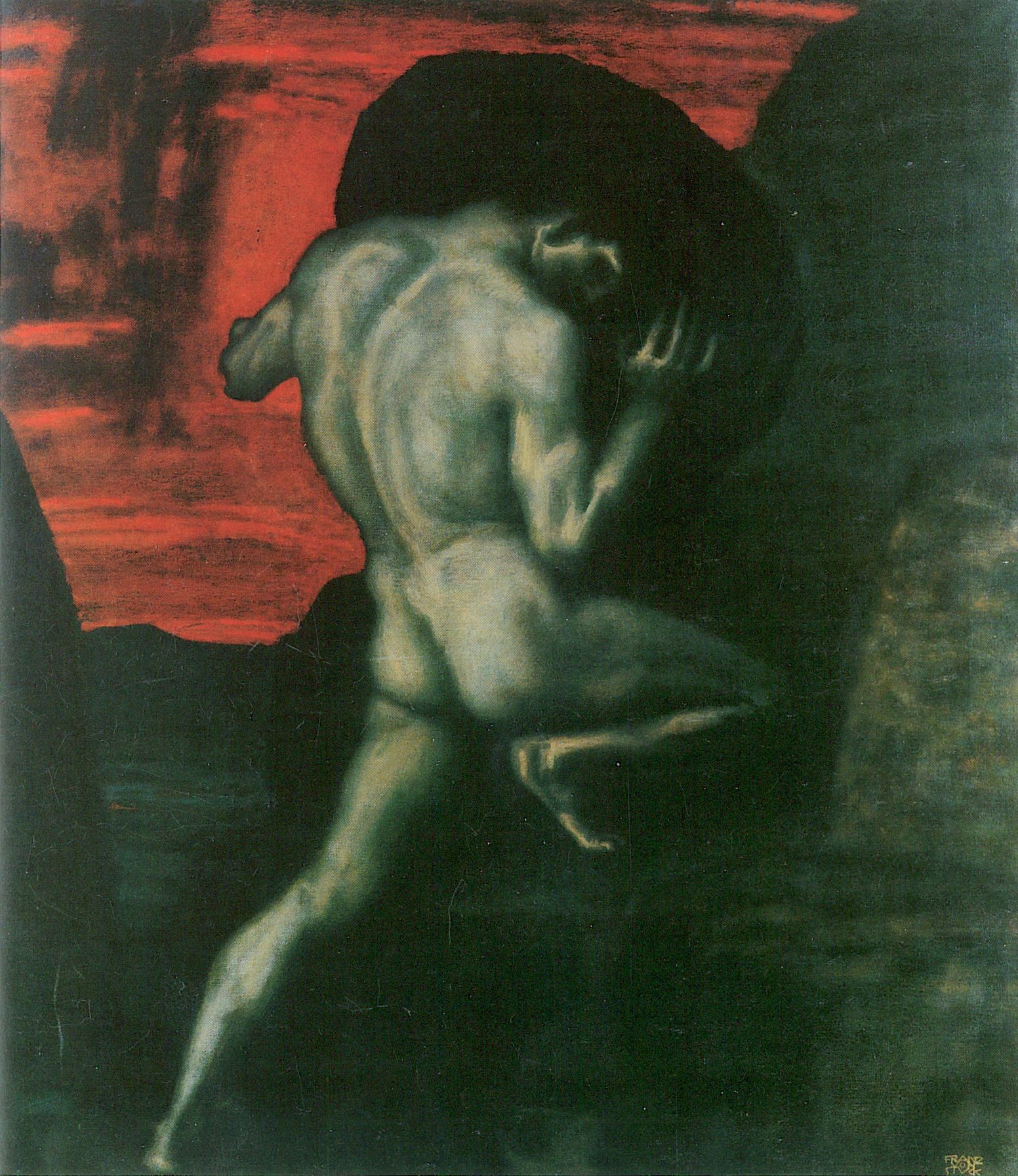
Sisyphus was – due to his sin of “cheating” death and fooling the Greek gods – condemned to push a massive boulder up a hill for eternity. Every time he reached the top, the boulder would roll back down, and he would have to start over. It is the ultimate picture of futility—much like that feeling on Monday morning, realizing the inbox you cleared on Friday is full again.
Nihilism vs Existentialism vs Absurdism
A Nihilist would look at Sisyphus and despair. An Existentialist would imagine Sisyphus building a cathedral with the rock. But the Absurdist? They just push.
Camus concludes his essay with a startling sentence: “One must imagine Sisyphus happy.”
Why happy? Because Sisyphus is awake. He knows the rock will fall, and he pushes it anyway. He rebels against the pointlessness of his punishment by living with passion.
He finds joy not in the completion of the task (which never happens), but in the struggle itself. The cool earth under his feet, the strain of his muscles, the sunlight on the rock—that is his life.
The Absurdist response to a meaningless world isn’t to fix it or to mourn it. It is to live in it with defiance. It is to say:
“The world is absurd, and I will embrace it. I will drink my coffee, I will love my family, and I will live vividly, precisely because it doesn’t matter.”
Read more: Fulfillment in Life – How to Find Meaning & Passion Every Day
Comparative Analysis: Nihilism vs Existentialism vs Absurdism
Before comparing the three schools of thought side-by-side, let us reflect on two concepts that often trip people up.
A note on “Positive” Nihilism
I have heard people asking: Is Nihilism always bad? Is it always a depressing, Grendel-like nightmare?
Not necessarily. In the Internet age, a new branch has emerged called Optimistic (or Positive) Nihilism.
Think about the scale of the universe. It is billions of years old. You will live for maybe 80 years. You are living on a tiny blue dot suspended in a sunbeam. To a traditional Nihilist, this insignificance is terrifying.
But to an Optimistic Nihilist, this is liberating.
If the universe doesn’t care about you, then it doesn’t judge you.
- That embarrassing thing you said at a party five years ago? It doesn’t matter.
- The fact that you aren’t a billionaire? It doesn’t matter.
- Your fear of failure? It is baseless, because even if you fail, the stars will still burn.
Positive Nihilism argues that because there is no grand destiny, you are free to enjoy the little things—the taste of a donut, the warmth of the sun, the time spent with friends—without the pressure of having to “achieve” some cosmic purpose. It turns the terrifying void into a playground.
The darker side: The “Sickness unto Death”
However, we must be careful. While Positive Nihilism does offer a temporary high, it (as I figure) lacks the structural integrity to hold us when real tragedy strikes.
The philosopher Søren Kierkegaard once addressed this in his work The Sickness unto Death. He argued that our despair isn’t just “sadness” or “depression” – but the result of a spiritual misalignment. According to Kierkegaard, the human self is a synthesis of the Finite (our physical bodies, limitations, death) and the Infinite (our imagination, eternal souls, possibilities).
- If you focus only on the Finite: You become a “philistine.” You follow the crowd, you buy the car, you fit in, but you lose your soul. You have no imagination, no possibility.
- If you focus only on the Infinite: You become a dreamer lost in fantasy, ignoring the reality of your actual life.
The “Sickness” is the state of not being your true self before God (or the Ultimate Reality). And the scary part?
You can be in despair and not know it. You can be successful, happy, and well-liked, yet spiritually, you are “dead” because you are not living authentically. You are living in “Bad Faith.”
Read more: Are You Living or Just Existing? Let’s Find Out!
Differences between Nihilism, Existentialism, and Absurdism
The knowledge that nothing matters, while accurate, gets you nowhere. The planet is dying. The sun is exploding. The universe is cooling. Nothing’s going to matter. The further back you pull the more that truth will endure. But, when you zoom in on earth, when you zoom in to a family, when you zoom into a human brain and a childhood and experience, you see all these things that matter.
Dan Harmon
Now, it’s time to get to the point. How do these three schools of thought actually play out when the rubber meets the road?
Let us break them down by their defining characteristics.
-
The core truth/ premise
All three schools of thought start at the exact same bus stop. They all look at the universe and see the same thing.
- Nihilism: “There is no objective meaning. The universe is silent.”
- Existentialism: “There is no objective meaning. Existence precedes essence.”
- Absurdism: “There is no objective meaning, but we have a desperate desire for it.”
The takeaway: If you are looking for a philosophy that tells you the universe has a “Grand Plan” for you, none of these are it. They all agree that the sky is empty. The difference lies entirely in what they do next.
-
The reaction
This is where the paths diverge. Once they realize the house is empty, how do they react?
- Nihilism (The Resignation): The Nihilist shrugs. If there is no meaning, there is no point in trying. The result is either passive nihilism (apathy) or active nihilism (destruction, like the Dragon). They drop the boulder because lifting it is illogical.
- Existentialism (The Creation): The Existentialist panics, then gets to work. They realize, “If God didn’t build the furniture, I have to.” They embrace Radical Freedom. They decide to create a meaning true for them.
- Absurdism (The Rebellion): The Absurdist laughs. They realize they can never know a “true” meaning (that would be lying to themselves), but they refuse to give up. They choose to live in the tension. They push the boulder knowing it will fall, simply to spite the gravity.
Who also accuse existentialism of being too gloomy, it makes me wonder if what they are really annoyed about is not its pessimism, but rather its optimism.
Jean-Paul Sartre, ‘Existentialism is a Humanism’
-
The goal
What does a “good life” look like in each framework?
- Nihilism: The goal is usually the cessation of worry, or the pursuit of hedonistic pleasure (since nothing matters anyway). It is a release from the burden of “purpose.”
- Existentialism: The goal is Authenticity. To live a life that is true to one’s own created values, not the values imposed by society, religion, or parents. The “win” is knowing you didn’t fake your life.
- Absurdism: The goal is Passion. To live as vividly and intensely as possible in the present moment. The “win” is not in the outcome, but in the revolt against the silence.
-
The vibe
Let us look at the “cheating” problem (often called Game Theory). Imagine you can cheat on a test (or a spouse, or a tax return) and guarantee you will never get caught.
- The Nihilist’s vibe: “Why not?” If there is no cosmic judge and no objective morality, the only rule is “don’t get caught.” If cheating brings you pleasure or advantage, the Nihilist argues there is no “real” reason not to do it.
- The Existentialist’s vibe: “I cannot.” Not because a teacher is watching, but because I am watching. If I cheat, I define myself as a “cheater.” I am responsible for the image of humanity I am creating. My decision defines my essence.
- The Absurdist’s vibe: “The test is a joke, but I’ll ace it anyway.” They acknowledge the test is meaningless (the degree, the job, the status—it’s all absurd). But they take the test with intense focus, not for the grade, but for the act of living.
| Feature | Nihilism | Existentialism | Absurdism |
| Source of Meaning | None | Created by the Self (Subjective) |
None (but we search anyway)
|
| Reaction to Absurdity | Resignation / Despair | Overcome it through creation |
Embrace and rebel against it
|
| Key Emotion | Apathy or Relief | Anxiety (Angst) & Responsibility |
Defiance & Passion
|

Nihilism vs Existentialism vs Absurdism explained and compared

Beyond Labels: Finding Your Own Way
So, which one are you?
Here is the secret that most philosophy textbooks won’t tell you: It doesn’t matter.
We humans love to label ourselves. We want to wear a badge that says “Absurdist” or “Christian” or “Stoic.” But as Zen masters often remind us, the finger pointing at the moon is not the moon. The label is not the life.
I have come across a lot of Reddit threads, social posts, and forum discussions where people argued that “This is existentialism”, “That is not existentialism”, or something similar.
To me, that’s just an example of being trapped in notions – and forgetting what really matters. Forgetting that at the end of the day, you don’t have to defend Sartre or anyone – except you yourself. Forgetting that you don’t have to follow anyone’s ideology – except YOURS.
For years, I myself have wrestled with many of life’s biggest questions. I have stared into the abyss that consumed my uncle. I have felt the “Monday Morning Dread.” And where I have landed is not in one rigid box, but in a synthesis—a “Way” that works for me.
I identify as a Christian Existentialist, but one deeply influenced by Eastern thought.
To me, the “Nothingness” of the Nihilist looks a lot like the Sunyata (Emptiness) of Buddhism. Not a scary void, but a space of infinite potential.
It is the realization that because I am not a fixed “thing,” I am connected to everything.
I don’t believe in the “God” of the systems—the one who checks certificates of confession. I believe in the God who is found in the Leap of Faith.
I believe that when we choose kindness in a cruel world, we are touching the Ultimate Reality.
To quote the Dalai Lama (you can replace “religion” with “ideology”/ “philosophy” or something similar; they all apply):
The best religion is one that gets you closest to God. It is the one that makes you a better person. I am not interested, my friend, about your religion or if you are religious or not. What really is important to me is your behavior in front of your peers, family, work, community and in front of the world.
Remember, the universe is the echo of our actions and our thoughts…. If we act with goodness, we will receive goodness. If we act with evil, we will get evil.
The weary office worker
You don’t need to read Sartre or Camus to get it. Just reflect on this simple example.
Imagine a man coming home after a 10-hour shift. His back aches. He has spent the day nodding at a boss he dislikes, doing work that feels utterly meaningless “in the grand scheme of the universe”. He is exhausted. The Nihilist in him wants to collapse.
But then, he opens the door. His five-year-old daughter runs down the hall, screaming “Daddy!”
In that split second, the spreadsheets vanish. The “absurdity” of his corporate job evaporates. He drops his bag and picks her up. He chooses to love. He chooses to be present.
Is he an Existentialist creating meaning? Is he an Absurdist rebelling against the fatigue? Is he a Christian/ Buddhist/ believer/ non-believer/ spiritual person acting out love?
He is ALL of them. And he is also NONE of them.
He is simply ALIVE.
When you practice looking deeply, you see your true nature of no birth, no death; no being, no non-being; no coming, no going; no same, no different. When you see this, you are free from fear. You are free from craving and free from jealousy. No fear is the ultimate joy. When you have the insight of no fear, you are free. And like the great beings, you ride serenely on the waves of birth and death.
Thich Nhat Hanh

Nihilism vs Existentialism vs Absurdism
Final Thoughts
Mundus vult decipi: the world wants to be deceived. The truth is too complex and frightening; the taste for the truth is an acquired taste that few acquire.
Martin Buber, “I and Thou”
We live in a strange time. The systems are failing. The “Dragon” of cynicism is loud, telling us that nothing matters, that we should just consume and give up.
But you have a choice.
You can let the darkness consume you, or you can supply your own light. As the philosopher Hannah Arendt wrote in her book Men in Dark Times:
“That even in the darkest of times we have the right to expect some illumination, and that such illumination might well come less from theories and concepts than from the uncertain, flickering, and often weak light that some men and women, in their lives and their works, will kindle…”
It doesn’t matter if your light is fueled by Jesus, by Buddha, by Sisyphus, or by your own stubborn will. What matters is that YOU kindle it.
Don’t worry about the labels. Don’t worry if you are “doing existentialism right.”
Just wake up. Embrace the freedom. Push the boulder.
And when the abyss gazes into you, just smile back—and get to work.
Even if God had been silent my whole life, to this very day, everything I do, everything I’ve done… Speaks of Him.
Father Rodrigues, ‘Silence‘ (2016)
Other resources you might be interested in:
- 100 Existential Quotes: Rethink One’s Place in the Universe
- 27 Best Existentialism Books: A Seeker’s Guide to Finding Meaning
- 20 Best Existential Movies for the Questioning Heart
- Ikigai (生き甲斐): Finding Your ‘Reason for Being’
Let’s Tread the Path Together, Shall We?

