

 Tiếng Việt
 日本語
日本語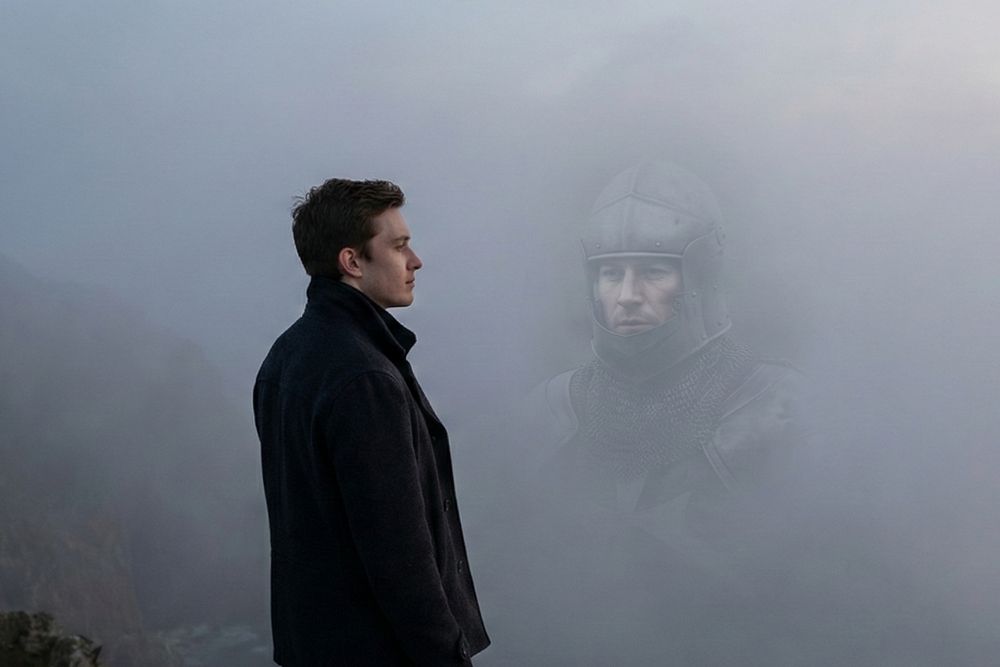
We have all faced moments where logic hits a dead end, right?
Maybe you are staring at a diagnosis that defies treatment, or you have quit a stable career to pursue a calling that pays nothing, or you are holding onto a relationship that everyone else says is doomed.
In these moments, it is often said that we have two options. We can “face reality” and give up (Resignation), or we can close our eyes and pretend the problem doesn’t exist (Delusion).
But the thing is, there is a third option. Søren Kierkegaard, the father of existentialism, referred to it as the Knight of Faith.
Highlights
- The Knight of Faith is an individual who lives fully in the ordinary world while maintaining an absolute relationship with the Infinite.
- Unlike the Knight of Infinite Resignation (who gives up desire to find peace), the Knight of Faith gives up desire but trusts they will receive it back by virtue of the “Absurd.”
- Faith is not logical; it is a paradox where the single individual is higher than the universal (society’s ethics).
- Becoming a Knight requires tuning into your intuition (“The Incommunicable”) and rejecting “Bad Faith”—choosing authentic conviction over the safety of the herd.
What is the Knight of Faith?
In his seminal work Fear and Trembling, Kierkegaard introduced the idea of the “Knight of Faith” – not as a superhero, but as an individual who has reached the highest stage of existence by embracing a paradox.
Think of it this way. Traditionally, most religious or spiritual heroes are depicted as distinct, somehow “unworldly”. You expect a saint to live in a cave, wear robes, and speak in riddles. You expect an “enlightened being” to look like a stoic philosopher, clearly detached from the petty concerns of daily life.
But if you met a Knight of Faith, you wouldn’t even know it. According to Kierkegaard, they look remarkably ordinary. They look like a tax collector, or a shopkeeper, or a regular office worker. They take a walk on Sunday. They enjoy a good meal with the gusto of a hedonist. They tend to their garden.
But internally, they are performing a movement that defies human reason.
Key characteristics:
- Embrace the Finite: Unlike the ascetic who flees the world to find God, the Knight of Faith finds the Infinite within the Finite. They don’t need to retreat to a monastery; they find the divine in the “everyday business” of being kind and showing up for work.
- Silence: Their struggle is, most of the time, incommunicable. Because their faith is a private, absolute relationship with the Divine (or the Ultimate Reality), they cannot explain their actions to others using universal logic. If they tried, they would sound insane.
- The Absurd: They believe by virtue of the absurd. (a crucial differentiator) They don’t believe because it makes sense; rather, they believe specifically because calculation has failed.
Knight of Faith explained
The story of Abraham & Isaac
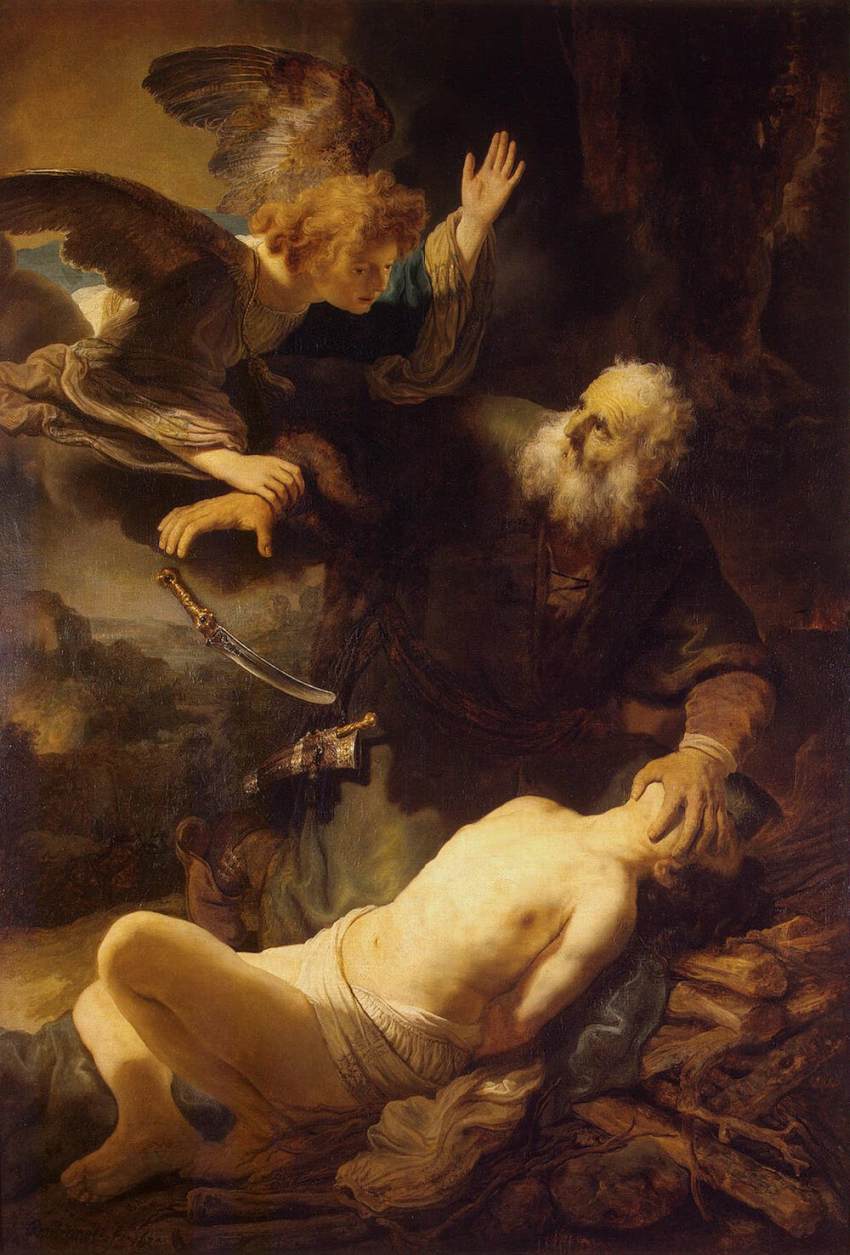
To illustrate the concept, Kierkegaard retold the Biblical story of Abraham—whom God commanded to sacrifice his beloved son, Isaac.
Some time later God tested Abraham. He said to him, “Abraham!”
“Here I am,” he replied.
“Take your son, your only son, whom you love—Isaac—and go to the region of Moriah. Sacrifice him there as a burnt offering on a mountain I will show you.”
Genesis 22:1-2
To most people, God’s command would make absolutely no sense at all. From a logical perspective, it is outright murder. And from an ethical perspective, it violates the universal duty of a father to protect his child.
And yet Abraham obeyed without questioning.
According to Kierkegaard, Abraham is the ultimate example of the “Knight of Faith”. His decision is—as Kierkegaard put it—a “Teleological Suspension of the Ethical.” He temporarily suspends the “Universal” (morality) for a higher “Telos” (goal)—his direct relationship with the Absolute.
The Knight of Faith vs the Knight of Infinite Resignation
To understand the idea of the Knight of Faith, we must first have a look at the stage that comes right before it: the Knight of Infinite Resignation.
- Resignation: The individual gives up everything they love in the world (their family, their reputation, their life) and resigns themselves to the fact that they will never have it. They accept the pain of loss and find a spiritual peace in the “infinite.”
- Faith: The Knight of Faith also gives up everything, but they believe that they will receive them back in this life. They don’t just hope for a reward in heaven; they believe God will provide in the here and now, despite it being logically impossible.
The dancer metaphor
One analogy Kierkegaard used to demonstrate the differences between these two types of “knight” is that of a dancer.
- The Knight of Infinite Resignation
This dancer leaps into the air (the Infinite). They float there, beautiful and detached. However, when they land, they stumble or look awkward. They cannot handle the “heaviness” of the earth. They have renounced the world to find peace, so they look like strangers when they try to live in it.
Real life example: Think of the ascetic monk who is holy, yet unable to relate to a joke or a good meal.
- The Knight of Faith
This one also leaps into the Infinite, yet they land on the ground perfectly. They transform the leap into a walk. They have made the movement of resignation (giving up the world), but then they make the second movement of faith (receiving the world back).
This is why they look so ordinary. They have reconciled the Infinite with the Finite. They are fully present at the dinner table—because they have trusted the Absurd.
In other words, the Knight of Faith lives fully in the finite world—enjoying their dinner, loving their spouse, doing their job—while simultaneously being grounded in the absolute impossible.
The parable of the princess
Another analogy Kierkegaard proposed is that of a young swain who falls in love with a Princess. The union is socially—and practically—impossible.
The Knight of Infinite Resignation would look at the situation and say:
“I accept I will never have her. I will keep my love young and pure in my spirit, I will remember her forever, but I give up the worldly expectation of being with her.” (This is Stoicism. It brings peace, but it is a sorrowful peace. He has saved his soul, but he has lost the world.)
The Knight of Faith, on the other hand, would look at the exact same situation and say:
“I accept that it is impossible. Yet, I believe somehow I will marry her. Not in a future life, but here, in this world. By virtue of the Absurd, she and I will be together.” (This is Faith. It is irrational. It brings joy, but it requires a trust that defies all logic.)
Note: The “Princess” here is just a placeholder. You can replace her with anything that feels like a calling but looks like a dead end—e.g. a dream job, a cure for an illness, or a reconciliation with an estranged family member. The idea is the same: realizing something is impossible, yet trusting it will happen anyway.
| Feature | Knight of Infinite Resignation | Knight of Faith |
| The Movement | Single Movement: Renounces the desire/object to find peace. | Double Movement: Renounces the desire, then receives it back. |
| The Mindset | Detachment: “I don’t need it to be happy.” | Paradox: “I let it go, yet I believe I will get it back because for God, all things are possible.” |
| Relationship to the World | Alien/Stranger: Detached from the finite world. | Joyful/Present: Fully at home in the finite world. |
| Basis of Peace | Reason: Accepting logical outcomes. | The Absurd: Trusting beyond logic. |
| Emotional State | Noble, sorrowful. | Joyful, present. |
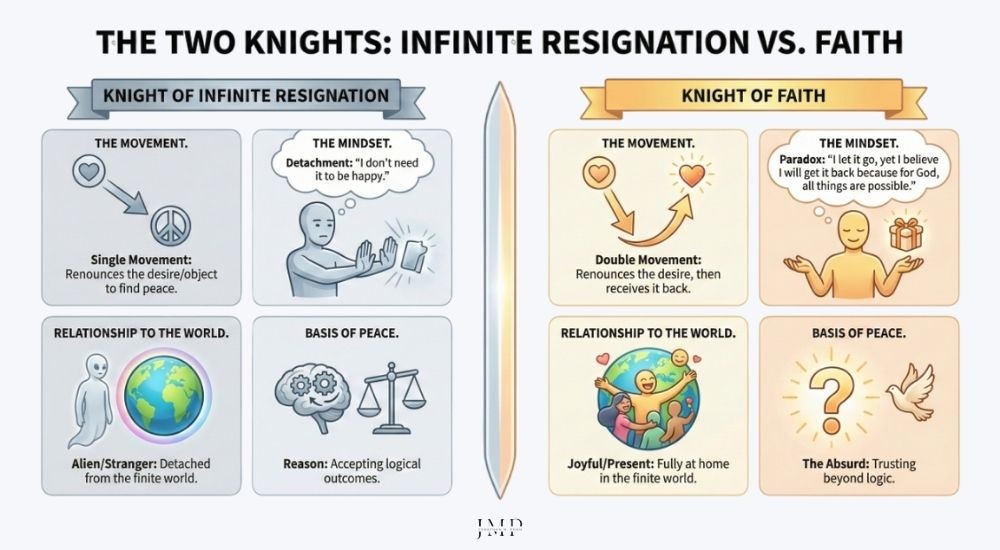
Differences between knight of resignation and knight of faith
Back to the story of Abraham. If he were a Knight of Infinite Resignation, he would think: “I will kill Isaac. I accept the loss. My heart is broken, but I submit to God’s will.“
However, that was not what Abraham did. He prepared the knife, yet simultaneously believed—through a logic-defying paradox—that he would get Isaac back. Not a new son, but this Isaac.
He walked up the mountain holding two contradictory truths: “I am giving him up” and “I am going to keep him.“
The Knight of Faith vs Other Heroes
Aside from the Knight of Infinite Resignation, we also need to compare Kierkegaard’s Knight of Faith to other types of heroes to better understand his philosophy.
The Knight vs. the Tragic Hero (Agamemnon)
In Greek tragedy, we often see heroes forced to make impossible choices. An example is King Agamemnon, who had to sacrifice his daughter, Iphigenia, to appease the gods and secure safe passage for his army to Troy. While his situation may look identical to that of Abraham (sacrificing a child), it is, in fact, quite different.
- The Tragic Hero stays within the “Ethical”: Agamemnon is sacrificing his daughter for the “Universal”—the good of the state. A terrible decision, but it is logical. He is trading a private love for a public duty.
- The Knight of Faith steps outside the “Ethical”: Abraham isn’t saving a country. There is no logical justification for his action. He is bypassing the Universal entirely to answer a private call from the Absolute.
Because the Tragic Hero remains within the realm of logic, he can explain himself. Agamemnon can weep and tell his people, “I do this for you.” They may grieve, but they understand him. He is a hero.
The Knight of Faith, however, is condemned to Silence. Abraham cannot explain his actions. If he told his neighbors, “God told me to do this,” they would not call him a hero; they would call him a murderer or a madman.
The Knight of Faith, therefore, walks a lonely path that no one else can understand or validate.
The Knight vs. Übermensch (The Overman)
Decades after Kierkegaard, Friedrich Nietzsche introduced the concept of the Übermensch (Overman/ Superman)—an individual who breaks free from “herd morality” to create their own values.
At first glance, they seem like spiritual twins. Both reject the “Thou Shalt” of society. Both rise above the crowd. Both require immense courage. However, their source of power is opposite.
- The Übermensch relies on Will: Nietzsche’s hero looks at a chaotic, godless universe and says, “I will assert my power. I will create my own meaning. I will love my fate (Amor Fati) because I chose it.” It is an act of supreme Self-Assertion.
- The Knight of Faith relies on Trust: Kierkegaard’s hero looks at the impossible and says, “I cannot do this on my own. I trust that the Good will be given back to me.” It is an act of supreme Self-Surrender.
Nietzsche described the highest stage of human evolution as “The Child“—a state of innocent play and creation. Interestingly, the Knight of Faith also lands in a “child-like” state. But while Nietzsche’s child plays to create a world, Kierkegaard’s child plays because they trust the Father.
One is the master of their own universe; the other is a beloved guest in a universe ruled by Love.
Read more: Unconditional Love – Key to Spiritual Transcendence
Knight of Faith vs Ubermensch
The Philosophy of the Knight of Faith: Authenticity & Connection
We have established what the Knight does. But why do they do it? Is it just madness? Is it blind obedience?
To answer this, we need to look at the internal engine of the Knight: Authenticity.
The rejection of “bad faith”
No doubt I do act in ‘bad faith’ when I deliberately avoid facing an honest decision and follow the conventional pattern of behavior in order to be spared the anxiety that comes when one is… thrown into seventy thousand fathoms.
John Macquarrie
It is a common misconception that faith is about compliance—following the rules of a religious institution or doing what the “Herd” expects. But Kierkegaard argued the exact opposite. In fact, he spent much of his life attacking “Christendom” (the cultural habit of going to church) precisely because it allowed people to sleepwalk through life.
Following a rulebook just to fit in is what existential philosophers referred to as “Bad Faith“—the lie we tell ourselves to escape the weight of freedom.
- The person who goes to church to be seen as a “good neighbor” is living in Bad Faith.
- The person who adopts a skeptical, atheistic worldview just to sound intellectual at parties is ALSO living in Bad Faith.
The Knight of Faith is the antithesis of this. Rather than blind obedience, he acts out of authentic conviction.
When Abraham walked up the mountain, he wasn’t doing it because “society said so” (society would say he is a murderer). Rather, he took absolute responsibility for his own spiritual existence.
He had moved from inherited belief (what others told him) to personal truth (what he knows in his bones).
The risk is entirely his. If he is wrong, there is no excuse.
That willingness to own the risk is what makes the Knight the ultimate authentic individual.
Read more: Are You Living or Just Existing? Let’s Find Out!
The nature of choice
However, this raises a difficult question: If the Knight is acting alone, are they just making things up? Are they hallucinating a command just to give their life meaning?
I believe we can address this problem by looking at the ideologies of two existential giants back in the day: Jean-Paul Sartre and Gabriel Marcel.
- Sartre’s “Radical Freedom”: Sartre believed we exist in a godless vacuum. To him, humanity is “condemned to be free.” We create our own values out of nothing. In this view, the Knight is just a lone rebel projecting meaning onto a silent universe.
- Marcel’s “Situated Freedom”: Gabriel Marcel, a Christian existentialist, thought differently. He argued that we don’t choose in a vacuum; we choose in response. According to him, freedom isn’t just about creating oneself; it’s about being “available” (disponibilité) to the call of the Other (or the Divine).
The Knight of Faith would align with Marcel’s thinking. They aren’t trying to invent a new morality (like Nietzsche’s Übermensch). Rather, they are trying to be Available.
Their “leap of faith” is not a jump into a void, but a response to a Voice.
The Knight has opened the door to the Absolute and said, “I am here. I am listening.” It is an act of communion, not isolation.
When we are able to act freely, we can move away from the isolated perspective of the problematic man (“I am body only,”) to that of the participative subject (“I am a being among beings”) who is capable of interaction with others in the world.
Gabriel Marcel
The connection to “Interbeing”
If the Knight is “responding” to the Absolute, this changes their relationship to the rest of us.
Think about it: By maintaining a relationship with the Infinite, the Knight becomes a vessel for it.
- When the parent (a hidden Knight) believes their sick child will heal against all odds, they aren’t just comforting themselves. They are keeping the flame of Hope alive for the whole family.
- When the artist believes in a vision no one else can see, they eventually bring new beauty into the collective world.
The Knight might be “silent” in the specifics of their struggle, but their disposition connects them to the deepest current of human existence.
By trusting the Absurd, they touch the bedrock of reality that connects us all.
In this sense, the Knight’s private faith is actually an act of universal service. By keeping the window to the Absolute open, they let fresh air into a stuffy, finite world, reminding the rest of us that there is more to life than what we can measure.
You are the light of the world. A town built on a hill cannot be hidden. Neither do people light a lamp and put it under a bowl. Instead they put it on its stand, and it gives light to everyone in the house. In the same way, let your light shine before others.
Matthew 5:14-16
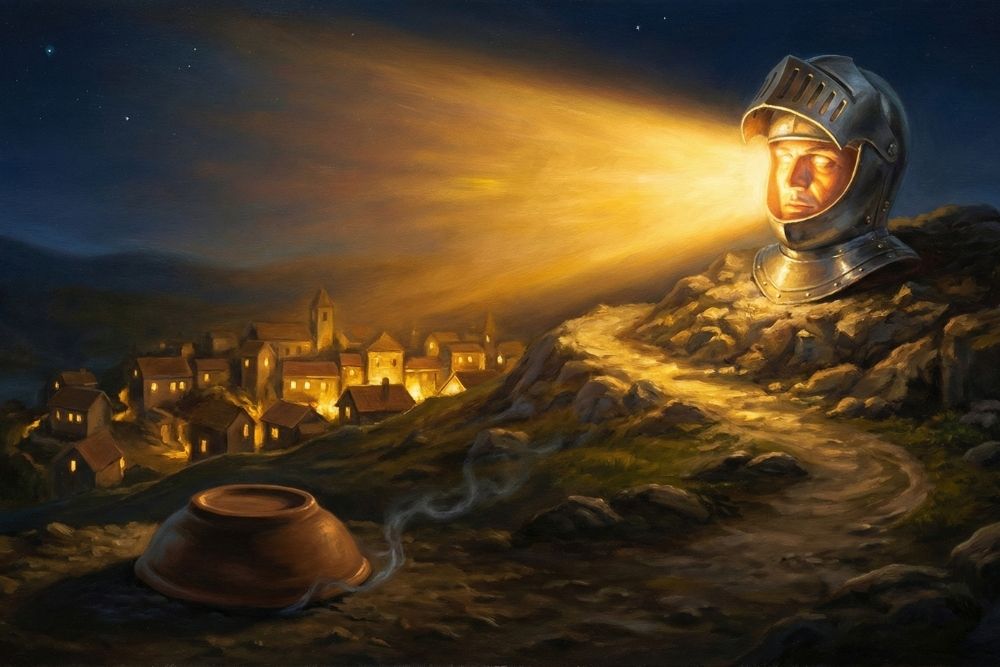
Knight of faith philosophy
How Do You Become a Knight of Faith?
You cannot sign up for a course, and you cannot force yourself to believe by sheer willpower.
Becoming a Knight of Faith is an internal posture you adopt toward life. It requires moving away from the safety of “The Herd”—and embracing your own existence wholeheartedly.
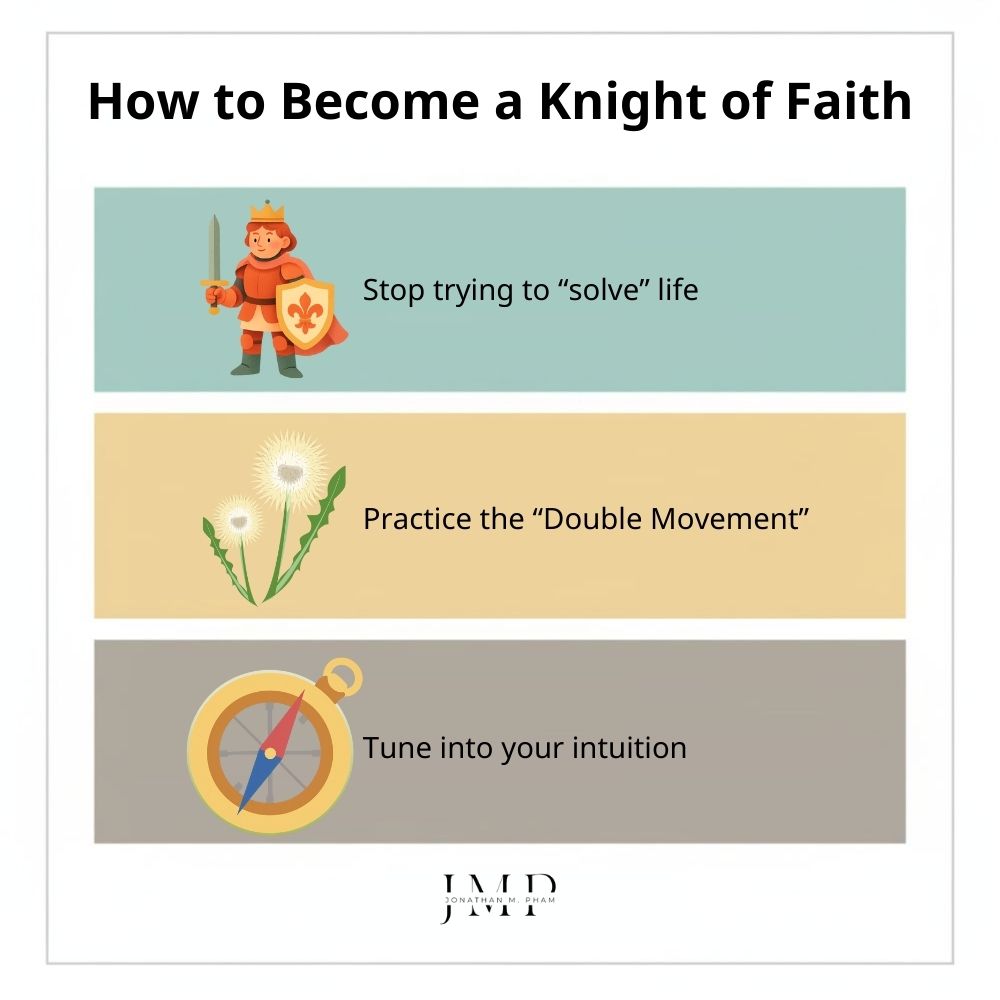
Stop trying to “solve” life
The first barrier to overcome is our obsession with certainty. From childhood, we are taught that if we cannot prove something with data, it isn’t real.
To become a Knight, you must be willing to admit that logic has a limit. It can explain how a ship floats, but it cannot explain why you survived the shipwreck.
Logic can explain biology, but it cannot explain why you love your child.
When you hit a wall—a career dead-end, a health/ spiritual crisis, a heartbreak—stop trying to calculate your way out.
Instead of asking, “Is this statistically probable?” ask, “Is this my path?”
If you stumble about believability, what are you living for? Love is hard to believe, ask any lover. Life is hard to believe, ask any scientist. God is hard to believe, ask any believer. What is your problem with hard-to-believe?
Yann Martel, ‘Life of Pi’
Practice the “Double Movement” (don’t skip the hard part)
Many people claim to have faith, but they are actually just entitled. They think, “I believe I will get the job because I want it.” That is NOT faith; that is pure ego.
To be a Knight, you must first be a Knight of Infinite Resignation, by accepting that you might fail. You must be willing to let go of the specific outcome (the job, the relationship, the status) and find peace without it.
Only after you have truly let go may you allow yourself to trust that it will be given back.
One way to test if it’s time to transition to the second movement is to ask yourself, “If I never get what I want, will I still be whole?“
If the answer is no, you are not ready for the movement of faith—yet.
Read more: The Curated Self – Why Authenticity on Social Media is Impossible
Tune into your intuition
According to Kierkegaard, the Knight’s path is lonely because it is “incommunicable.” In other words, it requires trusting your conscience or intuition—even when it contradicts the “universal” advice of society.
Society (the Herd), after all, loves safety. It will always tell you to keep the stable job, buy the house, and follow the script.
However, there will come a time when you feel a “call” to do something that looks foolish to everyone else—e.g. forgiving someone who “doesn’t deserve it”, or starting a project with no guarantee of profit.
Becoming a Knight means rejecting the “Herd Mentality”—not by running away to the woods, but by staying in the crowd while quietly following your own internal compass.
The true knight of faith is a witness, never a teacher, and therein lies his deep humanity, which is worth a good deal more than this silly participation in others’ weal and woe which is honored by the name of sympathy, whereas in fact it is nothing but vanity.
Søren Kierkegaard, Fear and Trembling
My Own “Leap of Faith”
To show you that this isn’t just about religious miracles, let me share a personal example of what this “Double Movement” looked like in my own life.
Two years ago, I held a position as a manager in the digital industry. By all societal metrics (“The Universal”), I had made it. The job was stable, the pay was good, and the career ladder was clear.
And yet, my intuition told me something was wrong. I could not help but feel a profound misalignment, a sense that I was drifting away from my true self.
- The Resignation (Movement 1)
Eventually, I decided to quit. Logically, my choice was “absurd.” I had no backup plan. I was forsaking a guaranteed paycheck to work on this blog, learn a new language, and research philosophy—none of which promised a single cent of return.
I had to resign myself to the possibility of failure. I had to accept that I might lose my status, my financial security, and the approval of my peers.
- The Faith (Movement 2)
Yet, even as I walked away from the safety net, I held an unshakable trust that this was the right path. I believed, by virtue of the absurd, that I would not drown. That by stepping into the unknown, I would regain my life in a richer, more authentic form.
- The Result
Two years later, I am still here. I have discovered a passion for philosophy and the human condition that I never knew existed before—a passion I would have missed entirely had I stayed in the safety of the office.
To this day, I haven’t even told my family about the full extent of my decision.
Like Abraham walking up the mountain, some choices are so personal that they cannot be explained until the journey is complete.
As I have realized, sometimes, you have to risk the “sure thing” to find the real thing.
The Path of God – “Only in the leap from the lion’s head will he prove his worth.”
Indiana Jones & the Last Crusade (1989)

Knight of Faith Quotes
Faith begins precisely where thinking leaves off.
Søren Kierkegaard
The thing is to find a truth which is true for me, to find the idea for which I am willing to live and die.
Søren Kierkegaard
If you want to improve, be content to be thought foolish and stupid with regard to external things.
Epictetus
To love means to commit oneself without guarantee, to give oneself completely. Love is an act of faith, and whoever is of little faith is also of little love.
Erich Fromm
Even if God had been silent my whole life, to this very day, everything I do, everything I’ve done… Speaks of Him.
Father Rodrigues, ‘Silence‘ (2016)
Final Thoughts
If you really think about it, you should see that the philosophy of the Knight of Faith teaches us something profound about what it means to be a human being.
Many of us (I myself used to) assume that to be “spiritual” or “wise,” we must detach from the world. That we need to transcend our desire for a job, a partner, or a happy life.
But as Kierkegaard argued, true greatness isn’t about leaving the world; it’s about regaining it.
The Knight of Faith doesn’t float away into the clouds. They stand firmly on the earth. They look at the world—with all its messiness, absurdity, and pain—and they say “Yes” to it.
They have the courage to resign their ego (to give up control).
But they also have the courage to trust (to believe that Goodness is still possible).
It is not an easy way to live. It is safer to be cynical. It is easier to be resigned.
But if you can manage that double movement—if you can dance that impossible dance—you will find a joy that no logic can touch. You will find that you are not just surviving the absurd; you are living in it, fully and completely.
As the Stoic emperor Marcus Aurelius once said:
“Waste no more time arguing about what a good man should be. Be one.”
Perhaps we can say the same for the Knight. Waste no more time arguing about whether the leap is logical. Just jump.
Other resources you might be interested in:
- The Absurd Hero: Finding Happiness in the Struggle
- The Shepherd of Being: Guarding the Mystery of Existence in an Age of Noise
- 60 Existential Questions: Reflect on Life’s Depths
- How to Deal with Existential Dread: A Seeker’s Guide to Finding Light
- The World is Not Black and White: Finding Grace in the Grey
Let’s Tread the Path Together, Shall We?

